

Richard Glossip Guilty Plea Ends Murder Prosecution After Nearly 30 Years

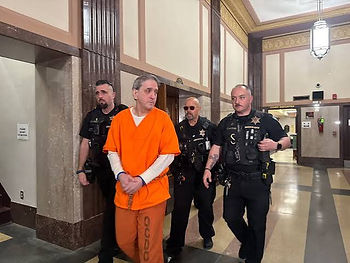
Richard Glossip Guilty Plea Ends Murder Prosecution Nearly 30 Years After Oklahoma City Killing
Richard Glossip pleaded guilty to accessory to first-degree murder in an Oklahoma County courtroom on Thursday, November 12, 2026, marking a major turning point in one of Oklahoma's longest-running and most controversial criminal cases. The former death row inmate entered the plea in connection with the 1997 killing of Oklahoma City motel owner Barry Van Treese, nearly three decades after Glossip was first arrested and accused of arranging the murder.
The agreement resulted in prosecutors dismissing the first-degree murder charge against Glossip, eliminating the possibility of a third murder trial and leaving his punishment to Oklahoma County District Judge Natalie Mai. Oklahoma Attorney General Gentner Drummond confirmed the decision Thursday, describing the reduced charge as a difficult compromise for prosecutors and the Van Treese family. The state is seeking the maximum 45-year prison sentence, while Glossip's attorneys argue that his nearly 30 years behind bars should be considered when the judge determines whether additional incarceration is warranted.
Richard Glossip Guilty Plea Resolves Decades-Long Murder Prosecution
The Richard Glossip guilty plea came during an Oklahoma County court proceeding Thursday, as attorneys prepared for another trial in a case that has drawn national attention for its disputed evidence, overturned convictions and repeated execution dates.
Glossip pleaded guilty to accessory after the fact to first-degree murder, a lesser offense than the murder charge prosecutors had pursued for nearly three decades.
The agreement means Glossip will no longer face another trial for first-degree murder in the death of Barry Van Treese.
Attorney General Gentner Drummond said the decision was difficult but provides a resolution that guarantees a criminal conviction connected to the killing.
In his statement Thursday, Drummond said Glossip had finally taken some measure of responsibility for Van Treese's murder.
Drummond explained that he and the Van Treese family agreed to the lesser charge because it ensures a conviction and gives prosecutors an opportunity to seek additional prison time.
The state is requesting the maximum sentence of 45 years, asking Judge Mai to consider what prosecutors describe as Glossip's deception and involvement in concealing the crime.
The lesser offense carries a sentencing range of five to 45 years in prison. However, Glossip has already spent nearly three decades incarcerated, making credit for time served a central issue in the upcoming sentencing proceedings.
The November 12 court proceedings in the Richard Glossip case also included members of the Van Treese family, who attended as prosecutors explained the decision to dismiss the murder charge.
Glossip's defense attorneys maintain that he did not arrange or participate in the killing itself.
Attorney Don Knight said the agreement was intended to bring the lengthy legal proceedings closer to an end and allow Glossip to move forward with his life.
The guilty plea establishes responsibility for the accessory offense, not a conviction for personally committing or arranging the murder.
Barry Van Treese Murder Case Led to Two Death Sentences and Supreme Court Review
The case began in January 1997, when Barry Van Treese, the owner of the Best Budget Inn in Oklahoma City, was beaten to death inside the motel.
Prosecutors alleged that Glossip, who worked as the motel's manager, arranged for maintenance worker Justin Sneed to kill Van Treese.
Sneed admitted striking Van Treese with a baseball bat and killing him.
Investigators alleged that Glossip promised Sneed $10,000 to carry out the murder, a claim Glossip has consistently denied.
Sneed testified against Glossip in exchange for avoiding the death penalty and received a sentence of life in prison without parole.
Glossip was convicted of first-degree murder in 1998 and sentenced to death. That conviction was later overturned, but he was convicted again following a second trial in 2004 and received another death sentence.
Over the following two decades, Glossip became one of the most prominent figures in national debates over capital punishment and the reliability of criminal convictions.
He faced nine scheduled execution dates and came close to execution on multiple occasions while maintaining that he had not ordered Van Treese's murder.
The case eventually reached the United States Supreme Court, where newly disclosed evidence raised serious questions about testimony presented during Glossip's second trial.
On February 25, 2025, the Supreme Court overturned his murder conviction and ordered a new trial.
In its 2025 decision in Glossip v. Oklahoma, the Supreme Court determined that prosecutors had violated Glossip's constitutional right to due process by failing to correct false testimony from Justin Sneed.
The justices examined evidence showing that Sneed had received psychiatric treatment and had been prescribed lithium, despite testifying that he had not seen a psychiatrist.
Prosecutors knew the testimony was false but failed to correct it before the jury.
Because Sneed's testimony provided the only direct evidence that Glossip arranged the killing, the Supreme Court determined that the false statements could have affected the jury's decision.
The ruling did not declare Glossip innocent. Instead, it concluded that constitutional violations had deprived him of a fair trial.
Attorney General Drummond had previously acknowledged the problems with the prosecution and supported overturning the conviction, while maintaining that he did not believe Glossip was innocent.
The Supreme Court's decision removed Glossip's death sentence and returned the case to Oklahoma County for further proceedings.
Richard Glossip Sentencing Set for December as State Seeks 45 Years
Following the Supreme Court's ruling, Glossip was transferred from death row to the Oklahoma County Detention Center while awaiting another trial.
In May 2026, Judge Natalie Mai granted Glossip release on a $500,000 bond, subject to several conditions.
Those conditions included GPS monitoring, a requirement that he live with his wife and a residential curfew from 10 p.m. until 7 a.m.
Glossip was released from custody after spending nearly 30 years incarcerated.
His third murder trial had been scheduled for December before Thursday's plea agreement eliminated the need for another jury proceeding.
The Oklahoma Attorney General's February 2025 statement on the Supreme Court ruling described the prosecution's failure to correct false testimony and the resulting constitutional violations that required a new trial.
Those findings became central to the negotiations that ultimately produced Thursday's reduced-charge agreement.
The case now moves into sentencing, where the prosecution and defense are expected to present sharply different arguments.
Drummond and the Van Treese family want the judge to impose the maximum 45-year sentence, arguing that Glossip's conduct warrants additional punishment.
Glossip's attorneys contend that he has already served far more time than would ordinarily be expected for the accessory offense and should not be returned to prison.
Judge Mai will determine the sentence after considering the plea, applicable Oklahoma law, arguments from both sides and any credit for time already served.
Sentencing proceedings are scheduled for December 17 and 18, 2026, in Oklahoma County District Court.
The outcome could determine whether Glossip remains free under the terms of his release or returns to prison after nearly three decades of litigation.
For the Van Treese family, the proceedings represent another attempt to reach a final resolution in a case that has remained in Oklahoma courts since 1997.
For Glossip, the hearing will determine whether the plea agreement ends his incarceration or results in additional prison time.
The Richard Glossip guilty plea brings the nearly 30-year murder prosecution involving Barry Van Treese closer to a conclusion after two death sentences, nine scheduled executions and a landmark U.S. Supreme Court ruling. With the first-degree murder charge dismissed, Glossip now faces sentencing for accessory to first-degree murder. Attorney General Gentner Drummond and the Van Treese family are seeking the maximum 45-year sentence, while Glossip's defense argues against further incarceration. Judge Natalie Mai is scheduled to determine his punishment during proceedings December 17 and 18.


Comments